2024 Annual Report: Year 2 in Review

Message from the Directors

The second year of Stanford Ecopreneurship has been an exciting ride. We have brought together two of Stanford’s core strengths—sustainability and entrepreneurship—into a systematic, holistic experience for today’s ecopreneurial students. Our goal is 1 + 1 = 3, where the synergy of our approach leads us to a result that is far greater than the sum of its parts.

We hope you feel inspired by the stories of budding ecopreneurs pursuing climate solutions that are at once global in scope and grounded in place, whether that’s in Vietnam, the Dominican Republic, or right here in the Bay Area.

The momentum is building with classwork and co-curricular opportunities for undergraduate and graduate students and an annual conference for the broader community. As we look to the year ahead, we aim to move with speed and at scale, and to inspire Stanford’s most powerful resource: our people.

With gratitude,

Yi Cui

Yi Cui

​Fortinet Founders Professor of Engineering; Professor of Materials Science and Engineering; and Faculty Director of the Sustainability Accelerator
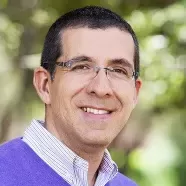
Stefanos Zenios

The Investment Group of Santa Barbara Professor of Entrepreneurship; Professor of Operations, Information & Technology; and Faculty Director of the Center for Entrepreneurial Studies

Scaling up for sustainability

Director Keegan Cooke shares the latest on how the Ecopreneurship Program is growing leaders on campus and connecting to the broader community.

The Ecopreneurship Program supports four key objectives:

Enrich

Enrich

ecopreneurial capacity with skills and contextual awareness

Discover

Discover

sustainability challenges and ecopreneurial opportunities

Evaluate

Evaluate

viability of the ecoventure ideas

Accelerate

Accelerate

development of ecoventures

Exploring beyond the classroom

In 2024, our co-curricular programs grew by more than a quarter, as our network of student fellowships and internships expanded.

Stanford Impact Founder in Ecopreneurship Fellowships and Awards (SIF-Eco)

As our flagship program, SIF-Eco provides fellows with $110,000 to pursue a high-impact for-profit or nonprofit that addresses a pressing environmental need. Fellows also connect with a community of mentors and peers to advance their leadership. This year, we selected 5 fellows and provided $20,000 awards to 5 finalists. 

See the 2024 SIF-Eco Fellows here.
See the 2024 SIF-Eco Prizewinners here.

Sankalp Banerjee

Sankalp Banerjee, MBA ’23, MS ’24
(E-IPER)

Palo Alto, CA
Insitu Energy is investigating how best to identify brownfields, such as decommissioned mines, landfills, and industrial sites, that can be turned into clean energy projects, starting in communities that have ties to coal, oil, and gas.

Sankalp Banerjee is the third generation of his family in the energy field. His grandfather had a career as a coal mining engineer in a small town in eastern India; his father in oil and gas. So, he sees the importance of integrating industry workers into an energy future beyond fossil fuels.

“Our goal is to accelerate the energy transition while helping the industry best use what we’ve already built, and earn the support of those community members,” he says.

With SIF-Eco, Insitu has been able to accelerate its traction with early customers and partners.

“The beauty of this fellowship is that we could start by deeply engaging and iterating with stakeholders without jumping to raise capital or forming predetermined conclusions about our business model,” he says.

There are economic advantages to prioritizing brownfield sites: They feature cheaper land, for one, and sometimes even easier paths to connect to the electrical grid. Environmentally, redeveloping these sites helps preserve farmland that would otherwise be converted to solar. Socially, it helps attract economic activity to underserved towns.

“It feels like the most important thing I could be working on,” he says.

Summer Ecopreneurial Immersion (Eco-SEI)

Through Eco-SEI, Stanford graduate students can evaluate an ecoventure in a lower-stakes way, testing their ideas and building their skills and confidence. This year, 21 participants investigated sustainability-focused business concepts, including 6 faculty extension projects, wherein students evaluated commercialization pathways of innovation coming out of Stanford labs.

See the 2024 Eco-SEI cohort here.

Pingyu Wang, MS ’21, PhD ’24, and ​Gradie Ngaruka, BS ’24, MS ’25

Palo Alto, CA
​CycleN is developing the technology to better measure nitrous oxide (N2O), a greenhouse gas that is 300 times more powerful than carbon dioxide (CO2), but that has historically been overlooked and ill understood.

This year, Gradie Ngaruka and Pingyu Wang teamed up with William Tarpeh, assistant professor of chemical engineering, in our second cohort of Ecopreneurship faculty extension projects. They developed a low-cost, scalable platform designed to better sense and capture nitrous oxide (N2O) emissions. This summer they set out to explore potential end users.

Nitrous oxide can be traced back to synthetic fertilizer on fields and livestock manure ponds on farms. It also emits from vehicles on the highway, certain factories, and wastewater treatment. Initially the duo focused on the agricultural sector, responsible for over half of human-made N2O emissions. But Ngaruka shares how emailing 200 farmers yielded only three responses.

“Ecopreneurship was a sandbox for me to play, to try different things, to get frustrated, to cry, but not really be hurt,” she says.

One of their takeaways was to first focus on wastewater treatment plants, a highly regulated—and thus, highly motivated—sector, a pivot that is already leading to fruitful partnerships on the San Francisco Peninsula.

For Wang, whose dissertation involved biosensors, this was his first foray into sustainability.

“The Stanford Ecopreneurship program has been transformative for me, particularly as someone transitioning from biomedical engineering to climate technology,” he says. “Sustainability was a new realm for me, and the program significantly lowered the entry barriers.”

Pingyu & Gradie in the lab
Pingyu & Gradie onsite

Ecoprenuerial Summer Internship Program (Eco-SIP)

Eco-SIP gives Stanford graduate students a chance to contribute directly to a sustainability startup over the summer. This year, 11 students secured paid internships through the program.

Maria Isabel Sanchez

Maria Isabel Sanchez, BS ’24, MS ’25

Santo Domingo, Dominican Republic
SOS Carbon is cleaning up coastlines by turning an invasive ocean plant into a commodity product, useful for agriculture, so it also becomes a carbon-sink.

“I am working for a nonprofit startup in my home country, and it’s honestly been one of the best summer experiences because I am making an impact in my own community using the things that I just learned in my engineering classes and applying that here.”

Through financial support from Eco-SIP, Maria Isabel Sanchez joined the team for SOS Carbon, a startup that is tackling sargassum, an invasive algae that has become a bane for tourism-driven Caribbean coastlines.

By efficiently collecting the sargassum seaweed, drying it, and processing it into a biostimulant for farms, SOS Carbon is keeping piles of rotting seaweed out of landfills, where they release methane and other potent greenhouse gases. The venture is also freeing up beaches for wildlife and visitors.

Sanchez spent the summer designing a solar tumble dryer for the venture in order to speed up the volume of sargassum that can be processed. In less than two months, she designed, built, and tested a prototype that fit in the back of a pickup truck.

“I’m leaving the company with a report, next steps, and a prototype,” she says. “I am so grateful for this opportunity. It’s crazy that I was able to get funding for a project back in my hometown, but it can also extend to other countries, and has the potential to improve economies.”

SOSCarbon onsite

Ecopreneur Circle

In addition, this year we launched the Ecopreneur Circle within Stanford Venture Studio, a hub for graduate students evaluating startup ideas through the GSB’s Center for Entrepreneurial Studies.

Alumni Spotlight

Our SIF-Eco fellows from 2023 have gone on to great things!   Here is one example SIF-Eco fellow:

Sasankh Munukutla

Sasankh Munukutla, BS ’22, MS ’23

Palo Alto, CA, and São Paulo, Brazil
​Sasankh Munukutla was named a 2023 Stanford Impact Fellow (SIF-Eco). Your support carried him through a crucial year as cofounder of Terradot, a startup that is on a mission to accelerate gigaton-scale carbon removal and storage in soil globally.

The last year has been formative for Terradot. The startup expanded its team by 35%, with employees spread across the Americas from São Paulo to San Francisco.  In December, Terradot raised $58.2M from Google, Microsoft and John Doerr.  

The Terradot team is focused on a solution called enhanced rock weathering (ERW), which they see as the most scalable and impactful way of permanently capturing carbon from the atmosphere. 

“There’s a lot of interest and excitement in ERW, but the key to unlocking it as a global climate solution is high-quality measurement, reporting, and verification,” says Munukutla. He explains that despite the simplicity of the solution—applying crushed rock powder to fields—proving how much carbon it captures at scale is difficult.

“You have to track the carbon through the soil, into the groundwater, then streams, rivers, and ultimately the ocean, where it is stored for hundreds of thousands of years. Nothing about that is easy.”

Read more Sasankh and Terradot here.

Sasankh testing carbon levels
Terradot onsite

Teaching ecopreneurship

In 2023–2024, our program strengthened our classroom presence. We bolstered courses and pathways for students interested in entrepreneurship by creating 11 new case studies on the challenge ecopreneurs face throughout their scaling journeys. Through Ecopreneurship curricular grants, 5 classes enriched the students’ experience with enhanced curriculum, field trips to ecoventures, and leading guest speakers.

The Ecopreneurship Resource Landscape guides students by their academic level and topical interest to nearly six dozen courses at Stanford, including 3 new classes first offered this year.

  • SUSTAIN 170/370: Scaling Sustainability Solutions with Prof. Will Chueh
  • STRAMGT 357: Ecopreneurship: Pioneering Sustainability Ventures with Monisha Perkash, Kunal Doshi, and John Scull
  • CEE 272M: Sustainable Mobility Seminar with Jimmy Chen and Prof. Ram Rajagopal

Class Spotlight

By supporting new and existing Ecopreneurship courses at Stanford, we have developed robust and cohesive educational experiences for students interested in sustainability and entrepreneurship. 

“This class would not have happened without the grant. Absolutely not.”
Jimmy Chen
Jimmy Chen
Managing Director StorageX Initiative, Precourt Institute for Energy

Starting a new course at Stanford is notoriously hard to do, but the Sustainable Mobility Seminar launched within one quarter thanks to an Ecopreneurship curricular grant.

“We took it from napkin brainstorming into a real class in three months,” says Jimmy Chen, managing director of Stanford’s StorageX Initiative and the originator of CEE 272M. Thirty students attended the lecture series, from undergrads through PhDs, including MBAs and law school students.

Gone are the days when electricity and transportation were in different industries. As transportation electrifies, this poses hurdles for planes, trains, and automobiles… and also ships, cranes, and cabs.

“This course is a great example of that broader picture, because at Stanford we have these leading experts on the design of airplanes, on how grid management electrification works, and this course offers a unique opportunity for the students to hear from the experts together. And so we took these things that are siloed, and created a context around it. We took a course and created a story,” says lecturer Herman Donner, who wrote the curriculum and recruited speakers.

With your support, Stanford students traveled to the Ports of Long Beach and Los Angeles for a field trip to see the sheer scale of these challenges. For example, if you mandate all ships turn off their engines in port, how do you provide shore power to 100 container ships, when the largest are three football fields in length and each hungry for enough electricity to power two thousand homes?

It is essential for our ecopreneurial students to witness the magnitude of these challenges personally, in order to learn how to better evaluate their ideas and build scalability into any solution they devise.

Sustainable Mobility Seminar

Reaching beyond Stanford

In May, we launched our inaugural conference with nearly 400 attendees and 75 speakers in total. Scaling Sustainable Innovation showcased startups with Stanford ties that spanned agriculture, the built environment, hydrogen, energy storage, carbon management, sustainable mobility, and the electric grid.

All the recordings from the conference are available to the public here.


Looking Ahead

We’re excited to deepen our impact on students and faculty here at Stanford and leverage new partnerships to reach ecopreneurs around the world. Some highlights include:

  • Hosting the Scaling Sustainability Innovation Conference on May 14, 2025 (Register to attend here) 
  • Expanding the Eco-SEI program to become the Ecopreneurial Summer Innovation Sprint (Eco-Sprint) with more robust programming and international partnerships
  • Continuing to reach more ecopreneurs on campus and around the world
